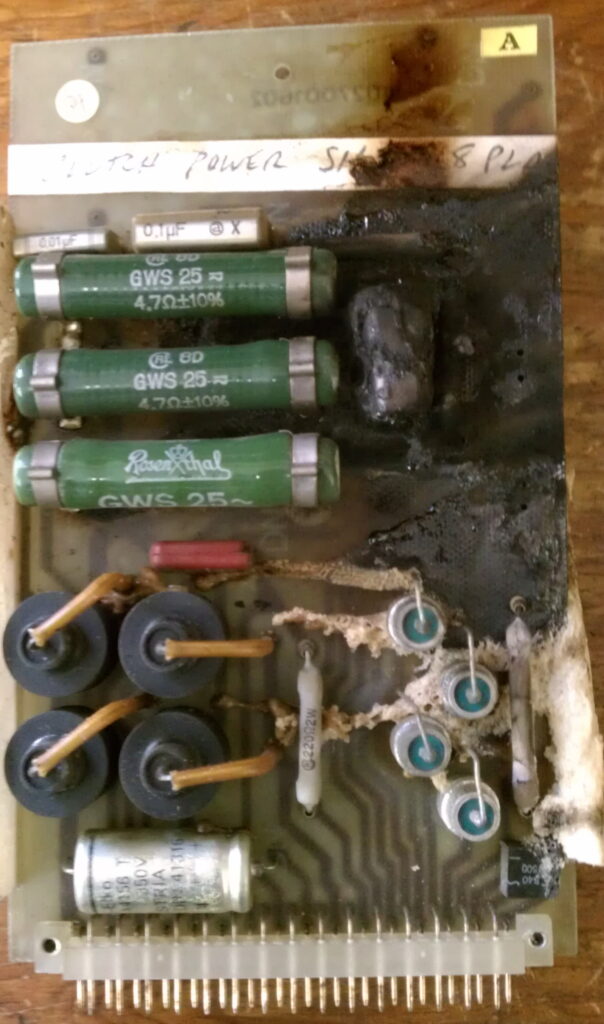
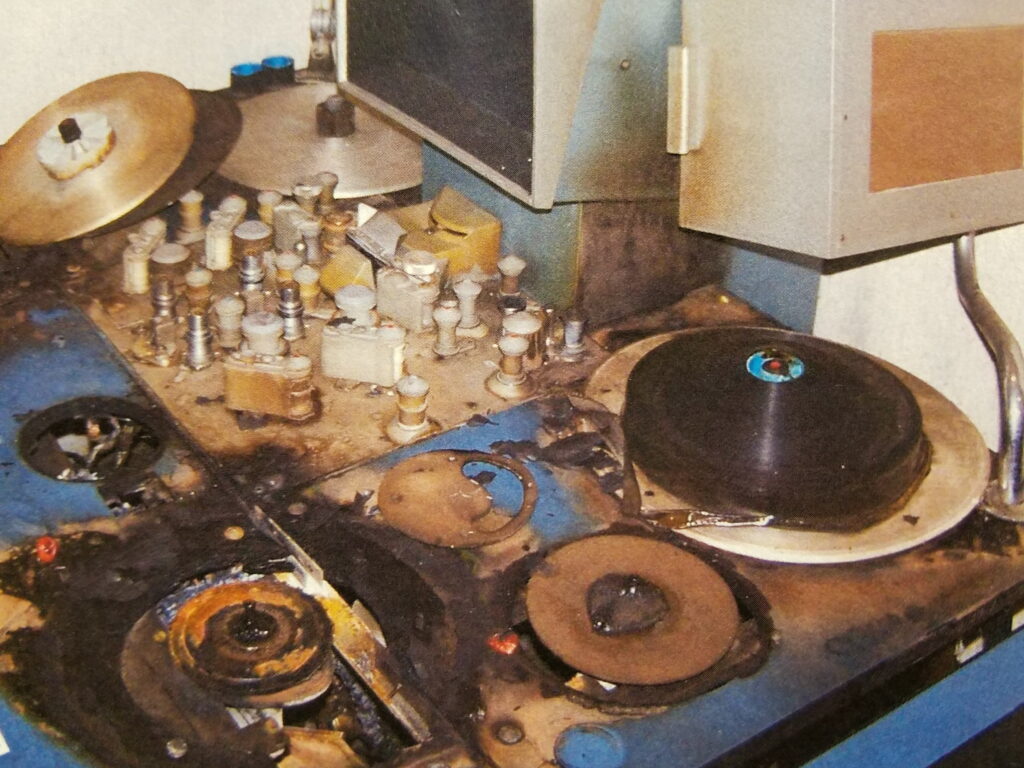
Warning: Operating your machine with the original A-Board increases the risk of violent failure possibly resulting in a fire! We highly recommend replacement of the board, working or not, with our “New Generation Version A-Board” providing an added measure of safety for less than $300.
NOTE: There are several versions of the original A-Board design besides the version shown at the left that have caused fires. Don’t let this happen to you!
Identifying older and newer vintage machines
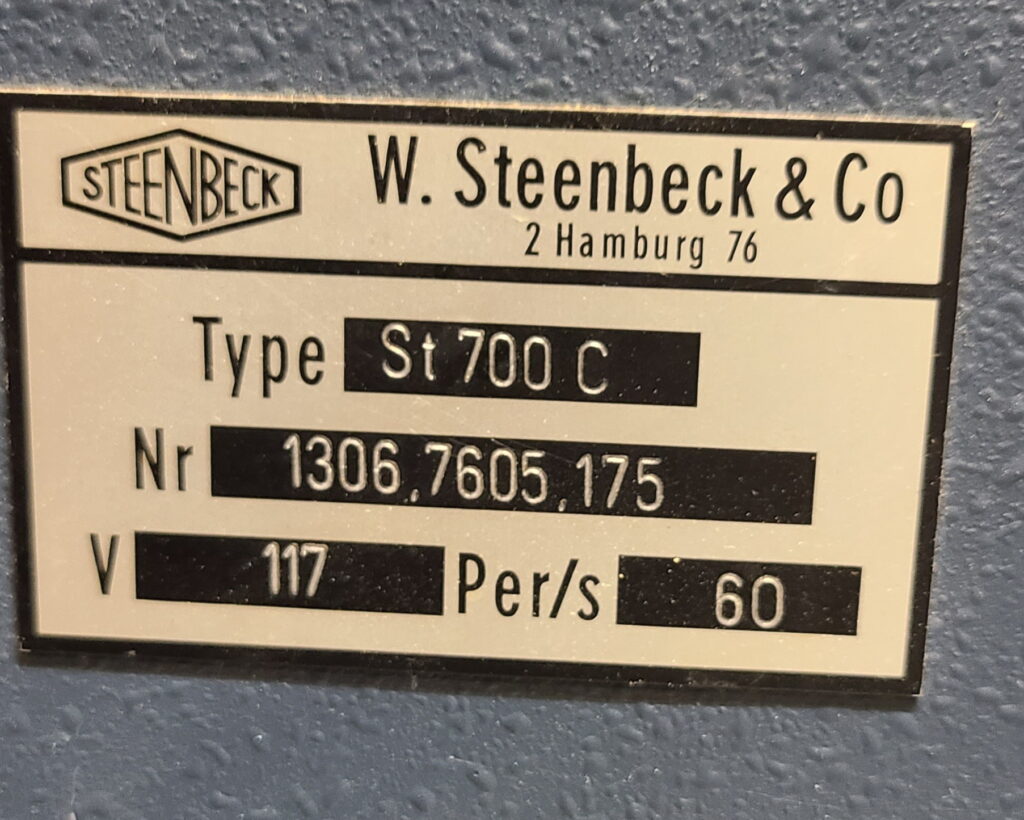
Look at the back of the editor where the power cord enters to locate the nameplate on the machine. If the last NUMBER in the TYPE box ends in zero (0), the editor is an older vintage machine (sometimes referred to as a STANDARD SPEED) editor. If the last NUMBER is a one (1) the editor is a newer vintage machine (sometimes referred to as a HIGH SPEED) editor. In the photo to the left, the editor (700C) is an older vintage (type 0 ) editor.
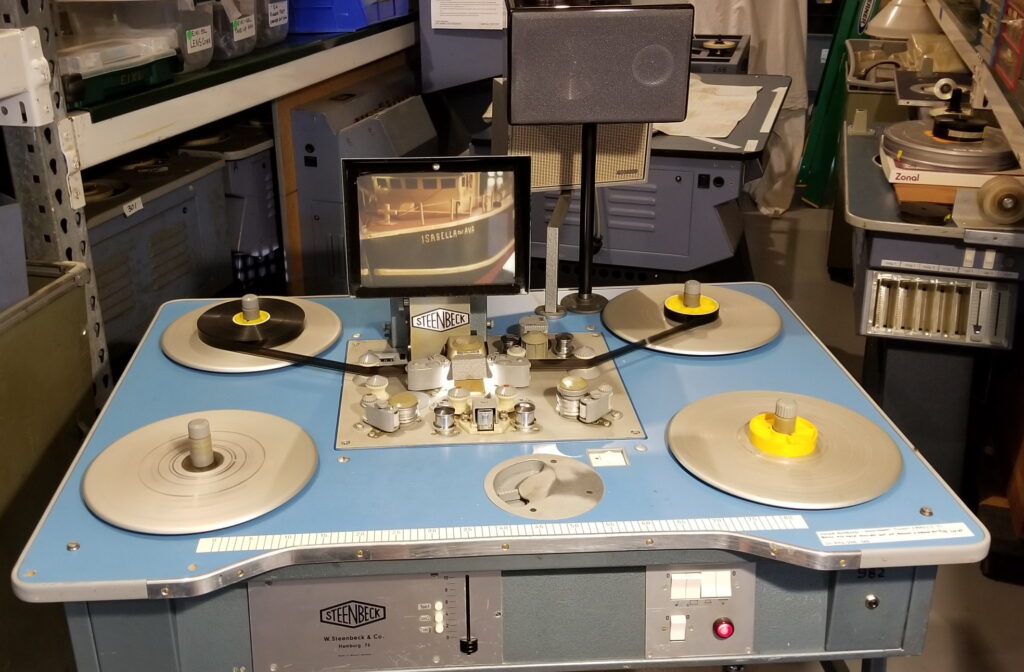
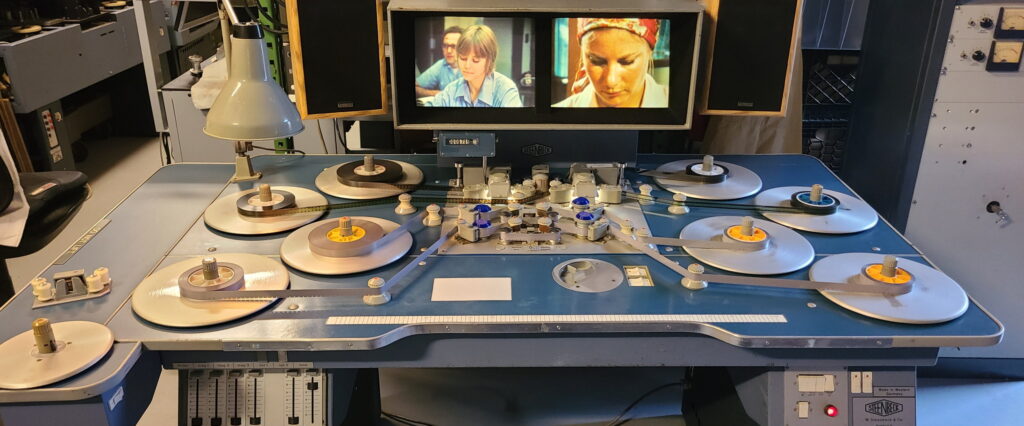
There are a few exemptions to the rule – such as the ST 928 (an older style two screen editor pictured below).
In the serial number (Nr) line, the middle four digits indicate the date the editor was manufactured (year and month). In the example photo, the editor was manufactured in May of 1976. The last three digits are the unique machine number.
ALERT! Whenever contacting The Boston Connection it is very helpful to let us know the “type and serial number” of the editor you have.